
The most popular advice on eco friendly kitchen cabinets is also the least useful. Buy bamboo, buy reclaimed, look for a green leaf on the brochure. None of that tells you where the wood came from, what the glue releases into your kitchen, or whether the box will swell, chip, and hit a landfill in a decade. A cheap cabinet marketed as eco can be the least sustainable purchase in the room if you replace it first. Judge the quote in front of you, not the label on the front of it.
Table of Contents
- What Makes Kitchen Cabinets Eco Friendly
- Sustainable Cabinet Materials and Finishes Compared
- Certifications and Standards Explained
- Cost and Lifecycle Impact of Eco Friendly Cabinets
- Choosing Eco Friendly Cabinets for Your Situation
- Vet Local Suppliers and Confirm Your Cabinet Order
- Maintenance That Keeps Cabinets Green for Decades
What Makes Kitchen Cabinets Eco Friendly
Treat a cabinet quote like a food label. The front says natural, green, or eco friendly. The back, if the seller will show it to you, lists the ingredients. That's where the decision lives.
Three tests separate a checkable claim from marketing copy.
The Three Tests to Carry Into Every Quote
- Source: Can the seller trace the wood to a managed forest with chain-of-custody paperwork, or document that it's salvaged from an existing building? A species name alone proves nothing.
- Emissions: Do the panels, glues, and finishes release formaldehyde or other volatile organic compounds (VOCs) into kitchen air, and can the seller show test results or a regulatory label?
- Lifespan: Will the box stay square, hold screws, and accept refinishing for decades, or will moisture and loose hardware force a full replacement?
A solid maple box from a local maker with a water-based finish can pass all three. The wood source is documented, the finish is low in solvents, and you can sand and refinish the doors instead of throwing them away.
A low-cost particleboard box with an unverified natural label may fail all three. The seller can't trace the fiber, can't show emission paperwork, and the core won't tolerate a sink leak or repeated hinge repairs.
A cabinet can pass one test and fail the other two. Score it, don't just approve or reject it.
That scorecard matters because trade-offs are real. Reclaimed wood wins on source but can lose on consistency. A durable plywood box can still carry a poor finish. Use source, emissions, and lifespan to compare every material, label, price, and maintenance claim that follows, and ask for documents whenever a salesperson offers an adjective instead.
Sustainable Cabinet Materials and Finishes Compared
| Material or Finish | Typical Source | Main Eco Advantage | Main Drawback | Relative Cost |
|---|---|---|---|---|
| FSC-certified hardwood plywood | Managed forests with chain-of-custody tracking | Traceable wood and a strong, stable box | Needs documented chain of custody, costs more than standard plywood | Mid to high |
| Reclaimed wood | Barns, factories, old flooring | No new harvest and natural character | Variable stock, hidden nails, limited color matching | High |
| Bamboo (engineered) | Fast-growing grass harvested in 3 to 5 years | Renewable and fast to regrow | Hardness varies, adhesives need emission documentation | Mid |
| MDF or particleboard with no-added formaldehyde resin | Wood fiber and residues bonded with resin | Uses wood residues and is the lowest-cost panel option | Weak moisture resistance, resin emissions if not compliant | Low |
| Solid FSC hardwood (maple, cherry, oak) | Certified hardwood forests | Durable and refinishable for decades | Heavier and the highest material cost | High |
| Water-based or low-VOC finish | Acrylic and waterborne polyurethane | Low solvent emissions and quick drying | Less amber warmth, may need an extra coat | Low to mid |
| Plant-oil finish (tung or linseed) | Plant oils | Natural ingredients and easy spot repair | Softer surface and slower cure | Mid |
Plywood Versus Solid Wood for Boxes
FSC-certified hardwood plywood is the practical default for most boxes. It's stable, holds fasteners well, and uses veneer efficiently. Solid hardwood makes more sense for doors, face frames, and drawer fronts you may refinish later. For a direct look at box construction trade-offs, see this comparison of plywood and MDF cabinets before you settle on a core.
Certified sourcing isn't a niche request. A U.S. Forest Service publication reported approximately 160 million hectares certified under the Forest Stewardship Council (FSC) as of June 2023 and about 291 million hectares under the Programme for the Endorsement of Forest Certification (PEFC), as summarized in the EPA small entity compliance guide for formaldehyde standards. Ask whether your specific components carry a chain-of-custody claim, not whether the company sells certified wood somewhere else.
Reclaimed Wood and Bamboo Need Extra Checks
Reclaimed wood avoids a new harvest, but you need to budget for sorting, denailing, moisture checks, pest inspection, and mismatched boards. Use it where variation looks intentional, such as an island front, rather than across a full run where you'll fight color differences.
Bamboo regrows quickly, yet engineered bamboo depends on adhesives. Don't accept the plant's growth rate as proof the finished panel is low-emission. Ask for the same panel documentation you'd request for MDF.
Composite Panels and Finishes Decide the Air Question
MDF and particleboard use residues and keep costs down, but only specify versions with no-added or ultra-low formaldehyde resin and verified compliance. Keep them away from chronic moisture where possible.
Water-based and plant-oil finishes release far fewer solvents than conventional solvent lacquers. Water-based products dry fast and suit painted or clear work. Plant oils are easier to spot-repair but cure slowly and give a softer surface.
Shop rule: A certified box under a high-emission finish isn't a finished eco specification. Check the panel, glue, edge treatment, and topcoat together.
Certifications and Standards Explained
Labels fall into two groups. FSC and PEFC verify where wood came from. EPA TSCA Title VI, CARB Phase 2, and GREENGUARD Gold address what a product releases into indoor air. Confusing those groups is how buyers end up with responsibly harvested wood bonded with a resin they never asked about.

| Label | What It Verifies | Where It Applies | Limit |
|---|---|---|---|
| FSC (Forest Stewardship Council) | Responsible forest management and chain of custody | Solid wood, veneer and plywood components | Certifies the wood source, not the glue or finish |
| PEFC (Programme for the Endorsement of Forest Certification) | Sustainable forest management under national schemes | Wood-based panels and solid wood | Scheme recognition varies by supplier region |
| EPA TSCA Title VI | Formaldehyde emission limits for composite wood | Hardwood plywood, MDF and particleboard | Limits emissions, not material origin |
| CARB Phase 2 | California formaldehyde limits for composite wood | Panels sold in California and widely used nationally | Numeric limits match TSCA Title VI, confirm the label |
| GREENGUARD Gold (UL) | Chemical emissions from the finished product, tested indoors | Finished cabinets and finishes | Tests the finished product, not every cabinet line |
The Regulatory Baseline
The EPA began enforcing formaldehyde requirements under TSCA Title VI on June 1, 2018. For products sold in the United States, the transition to TSCA Title VI labeling took full effect after March 22, 2019. The permitted limits are 0.05 ppm for hardwood plywood, 0.11 ppm for standard MDF, 0.13 ppm for thin MDF, and 0.09 ppm for particleboard, according to the EPA consumer questions page on formaldehyde standards.
That gives you something measurable to request. Ask for the label or certificate for each composite-wood component in the box, shelves, and doors. CARB Phase 2 uses matching numeric limits, so don't treat the two names as completely different levels of protection. Check that the paperwork matches the actual panel.
GREENGUARD Gold goes a step further by testing chemical emissions from a finished product rather than only a raw panel. It's useful, but it doesn't certify forest management. If you're comparing cabinets with other wood pieces in the home, the sustainable furniture advice from Tyner Furniture is a helpful companion for applying the same source questions beyond the kitchen.
No single label covers source, panel emissions, and finish. A complete specification normally stacks at least one wood-origin claim, one panel-emission document, and one finish data sheet.
Cost and Lifecycle Impact of Eco Friendly Cabinets
Start with cost per year, not cost per foot. As an illustrative example, a $150-per-foot cabinet lasting 12 years costs about $12.50 per foot per year. A $400-per-foot box lasting 30 years costs about $13.30 per foot per year, before removal and disposal. Once you add a second tear-out, new installation, and landfill haul for the cheaper run, that small gap can disappear.

The price cells below are intentionally left for your written quotes because cabinet-only pricing varies by region, cabinet count, construction, and installation. Fill each tier from comparable quotes, then divide by realistic service life. This guide to cabinet cost per linear foot can help you keep those quotes on the same basis.
| Tier | Typical Price per Linear Foot | Typical Eco Specification | Expected Service Life |
|---|---|---|---|
| Stock or RTA with no-added-formaldehyde core | Fill from written quote | TSCA-compliant MDF or particleboard, water-based finish | Confirm warranty and moisture limits in writing |
| Semi-custom with FSC plywood boxes | Fill from written quote | FSC-certified plywood boxes, low-VOC finish | About 20 to 30 years |
| Custom solid FSC hardwood | Fill from written quote | Solid FSC maple, cherry or oak, plant-oil or water-based finish | 30 years or more with refinishing |
| Reclaimed-wood custom | Quoted per project | Salvaged wood on FSC or documented plywood boxes | Depends on wood condition |
Where the Money Actually Jumps
Stock and ready-to-assemble cabinets with a no-added-formaldehyde core and water-based finish are the entry point. They're credible if the paperwork is real, but moisture tolerance and hardware quality limit the lifespan test.
Semi-custom FSC plywood boxes are the sweet spot for many households. You get a stronger box, better size options, and documented sourcing without paying for solid wood where nobody sees it.
Custom solid FSC hardwood costs the most upfront. You recover value only if you'll stay, maintain it, and refinish rather than replace. On like-for-like boxes, the eco premium is usually smaller than buyers fear. The big jump comes from upgrading construction, especially particleboard to plywood or solid wood.
Compare the quote you'll pay twice against the quote you'll pay once. Replacement is both a cost and an environmental impact.
Choosing Eco Friendly Cabinets for Your Situation
Rank your top priority first. You can't maximize indoor air, lifespan, character, resale appeal, and low price in the same box, so decide which test leads and where you'll accept a compromise. These steps for choosing kitchen cabinets can help you settle layout and construction before you narrow the eco specification.
| Situation | Top Priority | Recommended Specification | Watch Out For |
|---|---|---|---|
| Household with asthma or allergies | Indoor air quality | TSCA Title VI panels, no-added-formaldehyde core, water-based finish | Exposed edges and cutouts, ventilation during install |
| Forever home | Lifespan and repairability | Solid FSC hardwood or FSC plywood boxes with refinishable doors | Higher upfront cost |
| Home for resale or rental | Visible spec at a middle price | Semi-custom FSC plywood boxes, water-based finish, labels in the file | Overspending beyond what buyers notice |
| Budget remodel | Lowest verified cost | Stock or RTA with TSCA-compliant MDF, plywood in wet zones | Lower durability and moisture tolerance |
| Reclaimed-look kitchen | Character and reuse | Reclaimed doors on FSC or documented plywood boxes | Stock variation and hardware matching |
Match the Specification to the Risk
For a household focused on indoor air, go beyond minimum compliance where available. Specify composite-wood cores and laminate adhesives with no added urea-formaldehyde resin, and ask the manufacturer to identify the core, resin chemistry, test method, and measured result. The U.S. Green Building Council guidance recognizes testing under EN 717-1, CEN/TS 16516, and ISO 16000, with a formaldehyde limit of 0.05 ppm, or 0.06 mg/m²·h as an emission rate, for qualifying products, as described in the USGBC low-emitting material guidance. Check edges and cutouts too, because unfinished surfaces can emit more than sealed faces.
If you're staying for decades, spend on box construction and refinishable doors. That's where lifespan is won.
For resale or rental, choose a documented middle specification and keep the labels in the property file. Buyers can't value paperwork you don't retain, and overspending on custom solid wood may not return its cost.
On a tight budget, verified stock cabinets beat unverified premium claims. Put plywood in the sink base and other wet zones, even if the rest of the run uses compliant MDF. For a reclaimed look, limit salvaged material to doors or fronts and put them on documented plywood boxes so the structure stays predictable.
Vet Local Suppliers and Confirm Your Cabinet Order
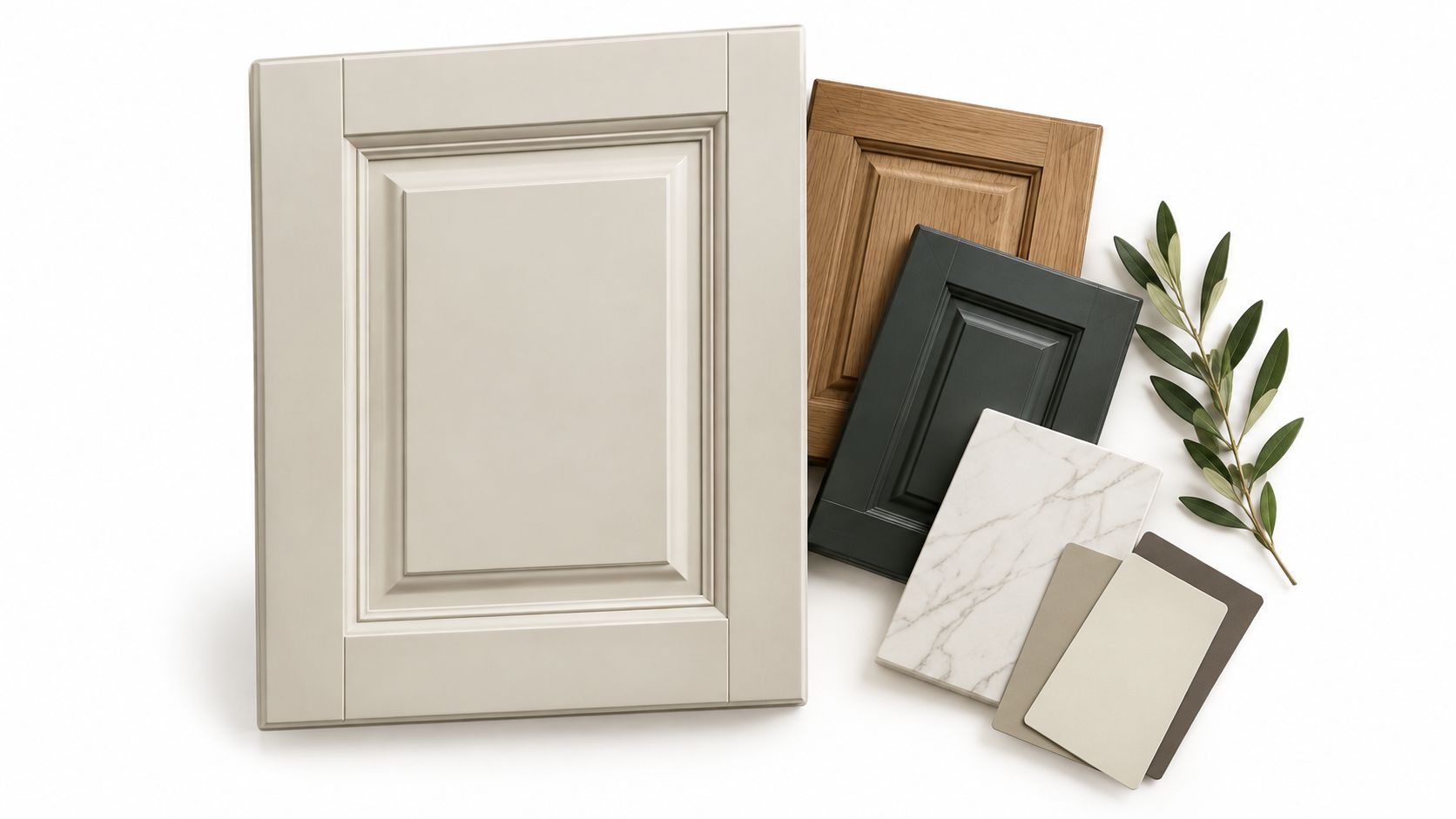
Local sourcing makes verification easier. You can inspect sample doors and finish chips in your own light, compare sheen against your floor and countertop, and ask who certifies the panel while the sample is in your hand. That beats judging color and construction from a small product photo.

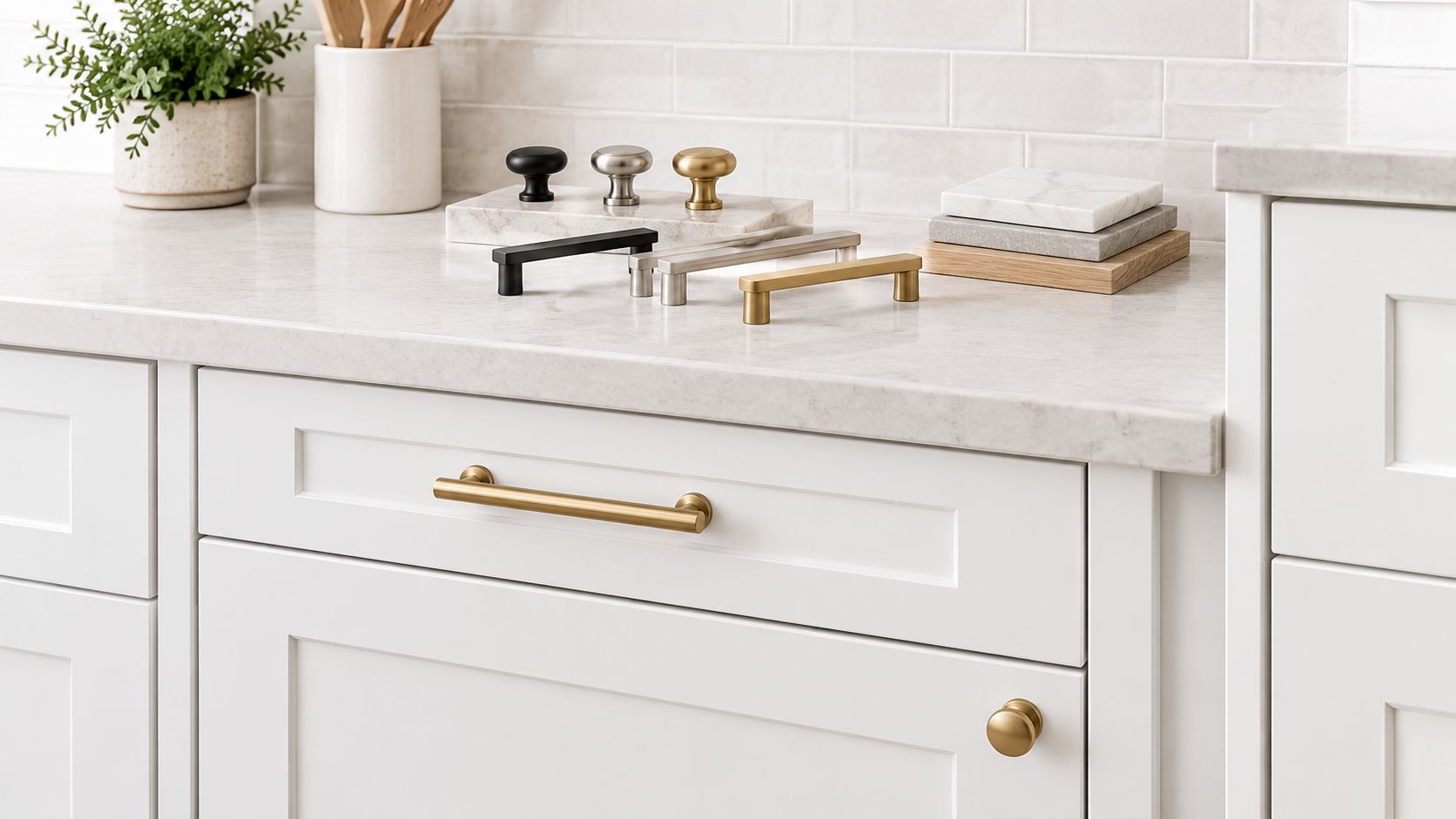
One example of the in-home format is The Cabinet Coach, a South Jersey mobile showroom serving Cherry Hill and nearby towns across Camden and Burlington counties. It brings curated cabinetry, finish samples, and hardware to the home, starting with a complimentary video consultation. If you're comparing that route with other kitchen remodeling contractors in New Jersey, use the same document checklist with every bidder.
For U.S. cabinetry, specify panels certified to EPA TSCA Title VI by an EPA-recognized third-party certifier. Finished goods containing hardwood plywood, MDF, or particleboard must carry compliant labeling when manufactured or imported after March 22, 2019, as the EPA formaldehyde emission standards page explains. Request the actual label or certification for each component instead of accepting eco-friendly, low-VOC, or green as evidence. Refer to the certification section above for the numeric limits rather than relying on a salesperson's summary.
Seven Questions to Ask Before You Sign
- Panel compliance: Which panels carry a TSCA Title VI label, and can you send the certificate for each composite-wood component?
- Wood origin: Is the box FSC chain-of-custody certified, and what's the certificate code for the material in my order?
- Resin chemistry: Which resin is used in the core, laminate adhesive, and edge treatment?
- Finish data: Can you provide the finish VOC data sheet and identify the exact product line for touch-ups?
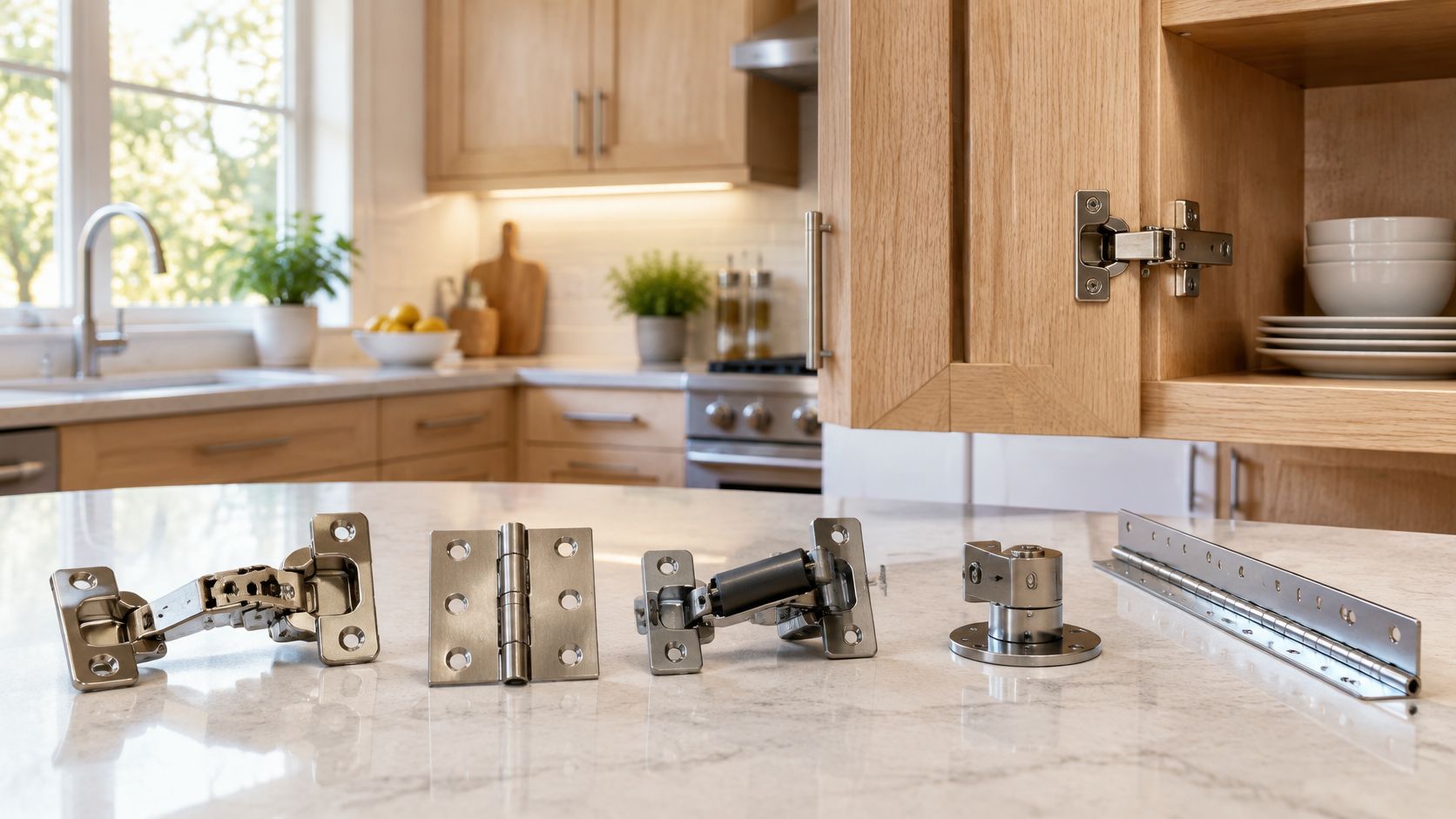
- Warranty coverage: What does the warranty cover for box failure, finish defects, hinges, and drawer glides, and what does it exclude?
- Old cabinet disposal: Will you remove the existing cabinets for reuse or recycling where practical, and is that priced in the quote?
- Written specification: Does the quote list the eco specification line by line, including box material, door material, resin or panel claim, and finish?
If a claim matters enough to influence your purchase, it matters enough to appear on the order.
Review door samples, finish chips, and spec sheets in one visit when you can. Confirm lead time, delivery condition, and who handles damaged or substituted components. Substitutions are where documented panels end up becoming whatever is in stock, so require written approval before any material change. Don't pay a deposit until every eco claim you relied on appears in writing.
Maintenance That Keeps Cabinets Green for Decades
A cabinet's green credentials depend partly on whether it stays in service. Water around the sink, heat near the range, and loose hardware can shorten a cabinet's life. Regular care helps protect the wood, finish, and box, while replacement of a damaged part can keep the rest of the run in use.

A Routine That Prevents Replacement
- Wipe weekly: Clean with a damp cloth and pH-neutral soap, then dry. Harsh cleaners can strip water-based finishes.
- Avoid solvent sprays: Keep solvent degreasers and aerosols away from cabinet surfaces. They can damage finishes and add VOCs to room air.
- Check hardware twice a year: Tighten hinges and inspect drawer glides. Loose hardware can rack doors and wear screw holes.
- Touch up chips promptly: Use the same water-based or plant-oil product recorded at purchase to match color and sheen. For a larger refresh, follow this guide to painting and staining cabinets.
- Control moisture: Keep indoor humidity between about 30 and 50 percent and run the range hood while cooking to remove moisture and airborne emissions.
- Refinish instead of replacing: Refinish solid wood doors when the finish shows wear or damage, provided the door structure remains sound.
- Replace parts, not sets: For local damage, order an individual door or drawer front instead of replacing a whole run.
Keep the purchase records together: the TSCA label, FSC certificate code, finish data sheet, warranty, and touch-up product name. These details help with warranty claims and matching repairs, and show a future buyer what materials and finishes were installed.
Before committing, compare cabinet samples and finishes in your own kitchen light. Bring your measurements and label questions to a complimentary video consultation with The Cabinet Coach, and request a written specification covering wood source, panel emissions, finish, and service life.